Motivation
Worldwide action to achieve a climate-resilient and sustainable world is more urgent than previously thought. Advancing carbon neutrality is the key but requires complex and fundamental transitions in human systems and ecosystems at a new depth and scale.
Land carbon cycle under climate change

On the carbon sink side, Prof. Laibao Liu’s lab focuses on land, which has absorbed about 30% of total anthropogenic CO₂ emissions over the past six decades, yet there is still no consensus on how long this land carbon sink can be sustained under climate change.
To help resolve this, we have led a series of studies to understand and constrain uncertainties in climate–carbon feedbacks. For instance, we demonstrated the increasing impact of drought on the tropical land carbon sink under climate change, highlighting the growing vulnerability of future land carbon efficiency to climate extremes(Liu et al., 2023 Nature). We also developed a novel approach to reconcile a long-standing debate regarding dryness stress on the land ecosystem carbon uptake(Liu et al., 2020 Nature Communications). Our studies improve understanding of the processes controlling the land carbon sink and enable better management of climate risks to this sink.
Selected Publications
Laibao Liu*, Philippe Ciais, Mengxi Wu, Ryan S. Padrón, Pierre Friedlingstein, Jonas Schwaab, Lukas Gudmundsson, and Sonia I. Seneviratne. 2023. Increasingly negative tropical water–interannual CO2 growth rate coupling. Nature 618 (7966):755-760. doi: 10.1038/s41586-023-06056-x [pdf]
Laibao Liu*, Lukas Gudmundsson, Mathias Hauser, Dahe Qin, Shuangcheng Li, and Sonia I. Seneviratne*. 2020. Soil moisture dominates dryness stress on ecosystem production globally. Nature Communications 11 (1):4892. doi: 10.1038/s41467-020-18631-1 [pdf]
Laibao Liu*, Rosie A. Fisher, Hervé Douville, Ryan S. Padrón, Alexis Berg, Jiafu Mao, Andrea Alessandri, Hyungjun Kim, and Sonia I. Seneviratne. 2024. No constraint on long-term tropical land carbon-climate feedback uncertainties from interannual variability. Communications Earth & Environment 5 (1):348. doi: 10.1038/s43247-024-01504-6 [pdf]
Net-zero energy system under climate change
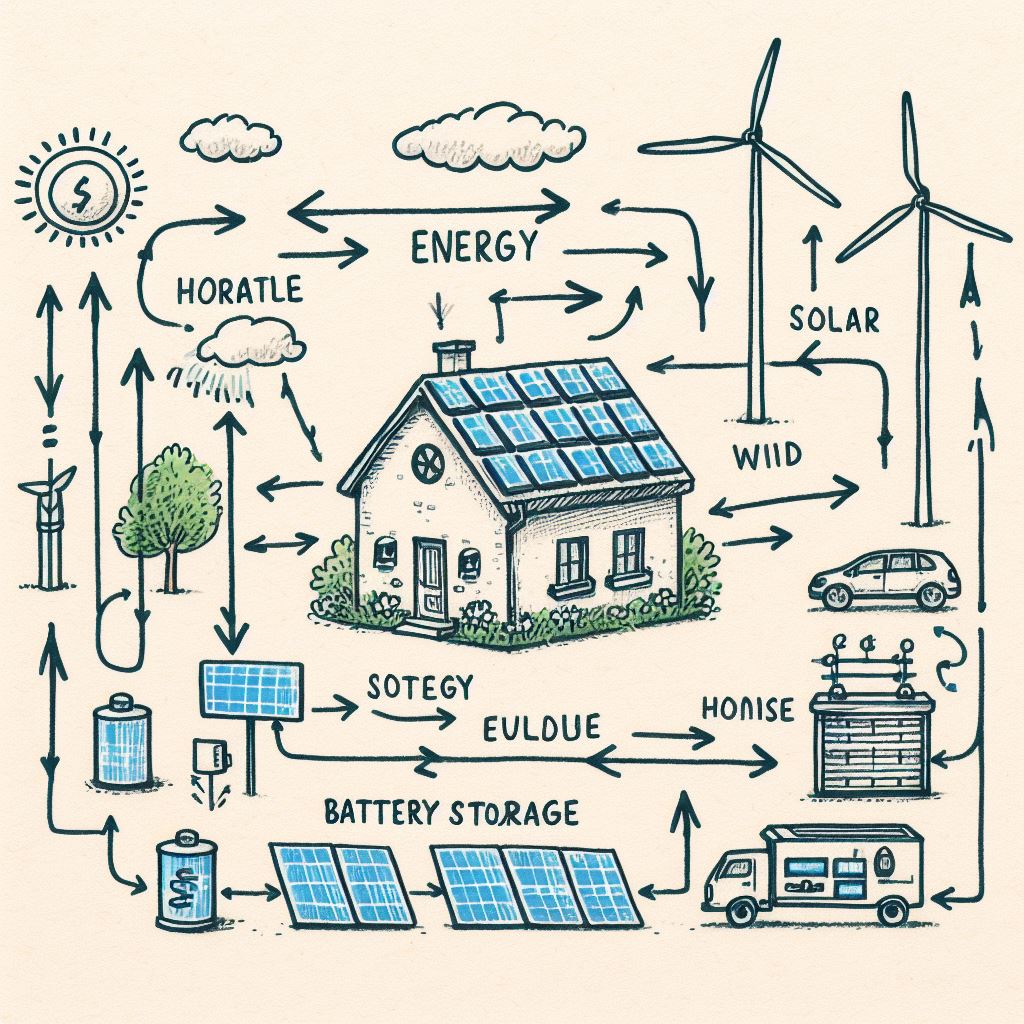
On the carbon source side, Prof. Laibao Liu’s lab focuses on the energy system, which accounts for about 75% of total anthropogenic CO₂ emissions, yet it remains unclear how to safely achieve a net-zero energy system transition under climate change.
To help address this, we have led a series of studies to provide climate services and development strategies for weather- and climate-dependent wind and solar energy systems. For instance, in collaboration with the China Meteorological Administration, we provided an up-to-date, fine-scale assessment of China’s wind and solar energy resources (60 min and 3 km resolution) and developed an innovative approach to spatially optimize wind and solar power plants in China to achieve carbon neutrality (Liu et al., 2022 RCR). We also provided a comprehensive assessment of climate change impacts on global wind and solar energy systems and issued an early warning of climate extreme risks for energy system planners (Liu et al., 2023 Nature Energy). Our studies accelerate and safeguard the transition to net-zero energy systems under climate change.
Selected Publications
Laibao Liu*, Gang He, Mengxi Wu*, Gang Liu, Haoran Zhang, Ying Chen, Jiashu Shen, and Shuangcheng Li. 2023. Climate Change Impacts on Planned Supply–Demand Match in Global Wind and Solar Energy Systems. Nature Energy 8(8): 870–880. doi: 10.1038/s41560-023-01304-w [pdf]
Laibao Liu*#, Yang Wang*#, Zheng Wang, Shuangcheng Li*, Jiangtao Li, Gang He, Yan Li, Yanxu Liu, Shilong Piao, Ziqi Gao, Rui Chang, Wenjun Tang, Kejun Jiang, Shijin Wang, Jun Wang, Lin Zhao, and Qingchen Chao. 2022. Potential Contributions of Wind and Solar Power to China’s Carbon Neutrality. Resources, Conservation and Recycling 180: 106155. doi: 10.1016/j.resconrec.2022.106155 (#, contribute equally) [pdf]
Laibao Liu, Zheng Wang, Yang Wang*, Jun Wang, Rui Chang, Gang He, Wenjun Tang, Ziqi Gao, Jiangtao Li, Changyi Liu, Lin Zhao, Dahe Qin, Shuangcheng Li*. 2020. Optimizing Wind/Solar Combinations at Finer Scales to Mitigate Renewable Energy Variability in China. Renewable and Sustainable Energy Reviews 132: 110151. doi: 10.1016/j.rser.2020.110151 [pdf]